The Technology
Not a bucket and a brush.
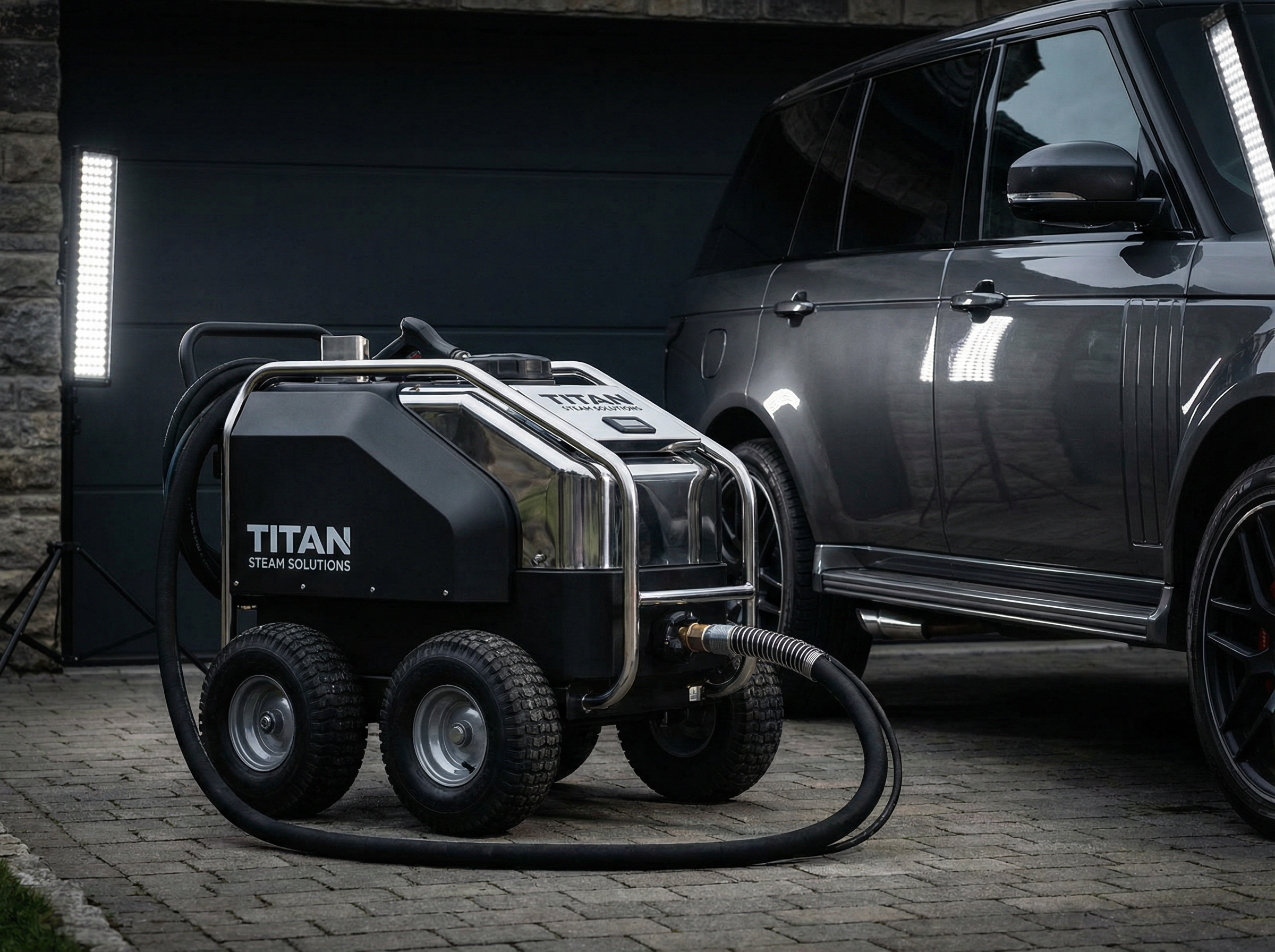
A diesel steam generator.
The same class of equipment used to sanitize aircraft cabins, hospital equipment, and marine vessels — now at your driveway.
How It Works
Superheated dry vapor.
Nothing else.
Commercial diesel steam generators heat water to 212°F under pressure, producing low-moisture "dry" vapor — steam so hot and dry that it penetrates surfaces without saturating them. When the nozzle contacts a contaminated surface, the heat instantly breaks the molecular bond between the contaminant and the material.
Grease, bacteria, mold, allergens, odor-causing compounds — all are destroyed by heat physics, not masked by chemicals. The surface is left clean, sanitized, and almost completely dry within minutes.
Traditional detailing relies on chemical degreasers, shampoos, and extractors that leave surfaces wet for hours and introduce residue. Kingsmaid uses none of them. The steam is the only tool required — from engine bay to leather headliner.
Chemical-Free Cleaning
Every surface — leather, suede, Alcantara, fabric, hard plastic, glass, rubber, metal — is cleaned using only water vapor. No detergents, no solvents, no degreasers. This makes Kingsmaid safe for exotic interiors, vehicles occupied by children and pets, and owners with chemical sensitivities.
Near-Zero Water Usage
A traditional exterior wash uses 30–80 gallons of water. A steam wash uses less than 1 gallon for a full exterior cleaning cycle. The diesel generator converts water to vapor on demand — meaning Kingsmaid can operate in any driveway, gated community, or parking structure without water hook-ups or drainage requirements.
Bacterial Kill Rate
Steam at 212°F kills 99.9% of bacteria, viruses, mold spores, and dust mite allergens on contact. This is the same principle behind hospital-grade steam sterilization. Every Kingsmaid service sanitizes your vehicle's interior at a level no chemical spray or wipe can replicate — especially important for families with young children.
Dry Instantly
Because so little moisture is introduced, interior surfaces treated with steam are dry to the touch the moment the nozzle moves on. Traditional shampoo extraction leaves carpets and seats wet for up to 2 hours — risking mold growth if the vehicle is closed during that time. Kingsmaid clients drive away with a clean, dry vehicle immediately, every time.
Side by Side
Steam vs. traditional detailing.
| Factor | Kingsmaid Steam | Traditional Detail |
|---|---|---|
| Water used per service | <1 gallon | 30–80 gallons |
| Chemicals required | Zero | 5–12 different products |
| Bacteria kill rate | 99.9% (212°F kill) | Partial (surface only) |
| Interior dry time | Instant | Up to 2 hours |
| Odor treatment | Eliminated at source | Masked by fragrance |
| Safe on exotic leather | Yes — no chemical risk | Product-dependent |
| Engine bay safe | Yes — dry steam only | Risk of water ingress |
| Vent cleaning depth | Full penetration | Surface-level only |
| Water runoff | None | Significant |
| Mold risk post-service | Virtually zero | Moderate if not dried |
Why Steam?
Common questions,
honest answers.
Is steam safe for exotic leather — Nappa, semi-aniline, Alcantara?
Yes — and in many cases, steam is the safest option for exotic leather. Chemical cleaners and conditioners contain solvents and surfactants that can strip natural oils, cause dye bleed, or leave residue in the grain. Steam uses only water vapor, which lifts dirt without introducing any foreign substance. Our technicians control temperature and distance precisely, and the vapor is so dry that it doesn't saturate the leather — it simply loosens and lifts contamination at the surface level. Rolls-Royce, Bentley, and McLaren interiors are routinely maintained this way.
Can steam damage my paint or clear coat?
No. The steam pressure we use for exterior surfaces is calibrated well below the threshold that could affect factory or aftermarket clear coat. Unlike pressure washing — which can exceed 2,000 PSI and physically erode coatings — our steam delivery is low-pressure and high-temperature. The heat dislodges contamination (road film, brake dust, organic matter) without mechanical abrasion. If your vehicle has a ceramic coating, steam is actually the recommended maintenance wash method because it won't degrade the coating the way soaps and brushes can.
What about electronics — screens, sensors, speakers?
Our technicians are trained to work around all sensitive electronics. Steam is applied directionally and never introduced directly into speaker grilles, infotainment screens, or sensor housings. Because the vapor is so low in moisture content, incidental contact with surrounding surfaces carries virtually no risk — far less than a damp cloth or a wet-extract shampoo. We've serviced vehicles with full digital dashboards, advanced driver-assist sensors, and aftermarket audio systems without incident. If you have a custom installation you'd like us to know about, just mention it in your booking notes.
Will steam damage rubber seals, trim, or plastic panels?
No — rubber seals and plastic trim actually respond very well to steam. The heat loosens grime from rubber gaskets and door seals without drying them out the way solvent-based cleaners can. Hard plastics, carbon fiber trim, and matte finishes are all steam-safe. We avoid directing steam at compromised or cracked plastic for extended periods, but for factory and aftermarket trim in good condition, there is no risk of warping, discoloration, or damage.
Is steam safe for vehicles with PPF or vinyl wraps?
Yes, with one caveat: we avoid applying concentrated steam directly to wrap or PPF edges for extended periods at very close range, as heat can soften adhesive at the borders over time. For the vast majority of the vehicle surface, steam is safe and effective on both PPF and vinyl. Many wrap installers actually recommend steam cleaning because it avoids the chemical reactions that some soaps can cause with certain wrap finishes. Let us know at booking if your vehicle is wrapped and we'll adjust technique accordingly.
Can steam remove odors — pet, smoke, mold?
Steam eliminates odors at their source rather than masking them. At 212°F, the vapor destroys the odor-causing bacteria, mold spores, and organic compounds embedded in fabric, carpet, and foam — the same materials that hold onto smells long after a surface wipe-down. For light to moderate odors, a Grand Steam service resolves the issue completely. For severe smoke saturation or mold contamination, we offer an ozone odor elimination add-on ($75) that complements the steam treatment and removes any remaining volatile compounds.
My car has a ceramic coating — will steam affect it?
Steam is one of the best maintenance methods for ceramic-coated vehicles. Traditional car washes use soaps and brushes that can introduce micro-scratches and gradually degrade the coating's hydrophobic properties. Steam cleans the surface without any abrasion and without chemicals that interact with the coating chemistry. We offer a dedicated Ceramic Coating Maintenance Wash add-on ($99) specifically designed for coated vehicles — preserving the coating's performance and longevity between annual inspections.
Is there anything steam can't clean?
Steam is highly effective on the vast majority of automotive soiling — but it's a thermal process, not a chemical one. Heavily oxidized paint, deep paint scratches, hard water mineral deposits bonded to glass, and embedded tar may require supplemental treatments. That's why we offer paint correction, hard water spot removal, and clay bar decontamination as standalone services. We'll always assess your vehicle before starting and let you know if anything falls outside what steam alone can address — no surprises.